Friday, March 15, 2013

THE HEART CHANNEL FUNCTIONS PART - 2

Backache
I often use points of the Heart channel for lower backache, particularly in men. The reason is the same as that given for the use of these points for men's sexual problems: the Heart is like an "Upper Kidney" and it therefore naturally influences the lower back. I find that the point HE-7 Shenmen is the best for this function because, besides its indirect action on the Kidney channel (and therefore the lower back), it also has a general anti-spastic effect, thus relaxing the muscles. I usually combine this point with the opening points of the Du Mai (only if the pain stems from the spine area).

An example of a combination in a man would be SI-3 Houxi on the left, BL-62 Shenmai on the right, HE-7 Shenmen on the right and KI 4 Dazhong on the left. If the pain is unilateral, I use KI-4 Dazhong on the side of the pain and HE-7 Shenmen on the opposite side.

Nausea, Vomiting
Although nausea and vomiting are always related to Stomach-Qi ascending instead of descending, Heart-Qi also has (or should have) a descending movement. The "Explanation of Acupuncture Points" says: "When Heart-Qi rebels upwards there is belching or vomiting: this means that Heart-Qi is full; tonifying the Water point [HE-3 Shaohai] will make Qi descend". The same also specifically recommends it for nausea and vomiting. The same text also recommends HE-5 Tongli for vomiting of bitter fluids and HE-7 Shenmen for vomiting of blood. The "Great Dictionary of Chinese Acupuncture" mentions also HE-6 Yinxi for vomiting of blood and HE-1 Jiquan for dry vomiting.

Furthermore, the Heart channel is closely related to the epigastrium; in fact, in the old times, the distinction between Heart pain and Epigastric pain was somewhat blurred. Incidentally, this is borne out by modern medicine too when symptoms of incipient cardiac infarction may often resemble indigestion.

Thus, if Heart-Qi ascends rather than descend, nausea and vomiting may ensue (which incidentally may also occur in the prodromal stage of a heart infarction). This is probably the reason why P-6 Neiguan (acting on the Heart) is such an important point for nausea and vomiting. From the Heart channel, HE-5 Tongli is the best point, and also Ren-15 Jiuwei or Ren-14 Juque both of which act on the Heart.

Calm Nerves in Asthma
Points of the Heart channel can be used to treat acute attacks of asthma. This is probably due to their anti-spastic action and they presumably relax the bronchial muscles and therefore relieve broncho constriction. Thus, in this case, Heart point are not used to "calm the Mind" but to relax the bronchial muscles.

The main point used is HE-7 Shenmen, usually in combination with Du-24 Shenting and Ren-15 Jiuwei (which relaxes the chest and acts on the Heart). The "Explanation of Acupuncture Points" recommends HE-7 Shenmen for rebellious Qi and Heart-Fire causing breathlessness. Heart points also help asthma because they help to restore the descending of Qi in the chest. The "Great Compendium of Acupuncture" recommends HE-7 Shenmen, SP-9 Yinlingquan, BL-60 Kunlun and GB-41 Zulinqi for breathlessness.

Tremors
Heart points can be used to alleviate tremors in Parkinson's disease. They have an effect on tremors for two reasons: first, through the anti spastic effect mentioned above; secondly, because Heart points will nourish Yin in the arm and will help to alleviate tremors of the arm (since Wind, especially in old people, derives from Yin deficiency). The main points are HE-7 Shenmen, HE-6 Yinxi and HE-5 Tongli. The "Great Dictionary of Chinese Acupuncture" recommends the point HE-3 Shaohai for contracture of the hand and numbness of the arm.

When treating the tremor of Parkinson, I would advise in any case not using too many Yang points on the arm as Yang corresponds to movement. Thus, I would balance the Yang points with some from Yin channels and especially those from the Heart channel.

Interestingly, the extra point for tremors called Xiaochanxue (Stopping Tremor Point) is located on the Heart channel (1.5. cun below HE-3 Shaohai).

Knees
The best point is HE-5 Tongli. The Su Wen mentions a combination for swollen and painful knee: SI-2 Qiangu, HE-8 Shaofu, KI-2 Rangu and BL-66 Tonggu. The Heart points affect the knee firstly because of the relationship with the Kidney channel and secondly, because Heart points can be used to clear Heat and cool Blood in general. I have tried this combination many times and it works. In my experience, it is best when the knee is inflamed and swollen.

Eye
Both the Heart main and Luo channels flow to the eye and Heart points can therefore be used for eye problems, especially from inflammation. The best point is HE-5 Tongli. In fact the "Explanation of Acupuncture Points" recommends HE-5 Tongli for painful and red eye (from Heart-Fire) and HE-7 Shenmen for yellow and painful eye.

Urinary Problems
The Heart channel points can be used for urinary problems due to its connection with the Bladder channel through the Small Intestine channel. In fact, the Heart is exteriorly-interiorly connected to the Small Intestine and this, in turn, has an Above-Below connection with the Bladder channel within the Tai Yang channels. The Heart channel is particularly used for Lin urinary problems from Heart-Heat transmitting to the Small Intestine and Bladder, and the main point is HE-8 Shaofu, in combination with SI-2 Qiangu, BL-66 Tonggu. Sometimes Heart-Fire combines with Liver-Fire to cause urinary problems and the main points are HE-8 Shaofu and LIV-2 Xingjian. The "Explanation of Acupuncture Points" recommends HE-8 Shaofu (with reducing method) for urinary problems.

Monday, March 11, 2013

THE EXTERIOR, INTERIOR AND PIVOT OF CHANNELS

Chapter 6 of the Su Wen introduces the concept of channels “opening onto the exterior” (or being the “opening”), closing onto the interior (or “being the door leaf”) and being the pivot (or hinge).

In this chapter the order for the Yang channels is as follows:
Tai Yang opens
Yang Ming closes
Shao Yang is the pivot
 
The order for the Yin channels is:
Tai Yin opens
Jue Yin closes
Shao Yin is the pivot

With regard to the Yin channels I personally see the Jue Yin as the pivot (I call it “hinge”) and the Shao Yin as opening onto the interior (or “closing”).  There are various reasons for this.

 Firstly, if we read chapter 6 of the Su Wen in full and we look at the context of the exterior/interior/hinge quote, we will see that things are not quite as they seem. It sounds like this chapter is talking more about Zangfu organs than channels and more about the trunk and abdomen than arm or leg channels.

Secondly, the very same chapter also says:  “The vessel behind Tai Yin is Shao Yin. The vessel in front of Shao Yin is Jue Yin.” Therefore, Tai Yin is in front of Shao Yin and Jue Yin is in front of Shao Yin: this means that Jue Yin is in the middle between Tai Yin (the ‘front”) and Shao Yin (the “back”).  That sounds very much like the Jue Yin is in between the Tai Yin and the Shao Yin, i.e. it is the “hinge”.  Moreover, when it talks about the Yang, chapter 6 says: “The vessel outside the Jue Yin is the Shao Yang.”  As the Shao Yang is the hinge of the Yang, it being “outside the Jue Yin” would imply that the Jue Yin must be a hinge too.Of course the Shao Yang (Triple Burner and Gall-Bladder) have a Yin-Yang connection with the Jue Yin (Pericardium and Liver) and that is why this chapter says that the Shao Yang is "outside" the Jue Yin.

Thirdly, the book “Great Treatise of Chinese Acupuncture” (Zhong Guo Zhen Jiu Da Quan) by Wang Xue Tai uses similar terminology when it refers to “front”, “middle” and “back” of channels, which I would translate as “lateral”, “middle” and “medial”.  This book confirms that the Jue Yin is in the "middle".

This is reflected all over the body in the situation of the channels (with the exception of the lower leg). For example, if we look at the chest, we have the Spleen channel (Tai Yin) outside (lateral), the Kidney channel (Shao Yin) inside (medial) and the Liver channel (Jue Yin) in between.  The same in the abdomen.  This is even clearer in the arm where we have the Lung channel (Tai Yin) on the lateral side, the Pericardium channel (Jue Yin) in the middle and the Heart channel (Shao Yin) on the medial side.  Only the lower leg represents an exception as the Liver channel (Jue Yin) is on the lateral side initially but it crosses over in the middle of the lower leg.                        
 
The order of arrangement of the 6 Stages in the Shang Han Lun also points to the Jue Yin being the hinge.  In fact, this is the order:

Tai Yang
Yang Ming
Shao Yang
Tai Yin
Shao Yin
Jue Yin

Thus, if Shao Yang is the hinge of the Yang channels, then the Jue Yin must also be of the Yin channels because it occupies a corresponding place in the Yin as that of the Yang.
 
If we look at the 12 channels during the day (LU-LI-ST-SP, etc.)  we get:

Ext            Int                 Int                Ext          Hinge        Hinge   

Tai Yin    Yang Ming    Shao Yin    Tai Yang    Jue Yin    Shao Yang
LU           LI                 HE               SI               P             TB       
SP            ST                KI                BL            LIV          GB

If we bear in mind the Yin-Yang connections among channels, the Triple Burner (Shao Yang) is connected to the Pericardium (Jue Yin) and the Gall-Bladder (Shao Yang) to the Liver (Jue Yin). Therefore, if the Shao Yang is the hinge of the Yang (as it clearly is), then the Jue Yin must be the hinge of the Yin. The diagrams below illustrate this concept.


 The two diagrams below show the position of the channels in arms and legs as indicated above. The diagram below shows clearly how, if we related the concept of opening/closing/hinge to channel topography, the Jue Yin must be the hinge. Notice how the Heart and Kidney channels are both medial, both "inside", both the "most interior" (and therefore not pivot or hinge) of the Yin channels.


Clinical significance
What is the clinical significance of all this? In my opinion, the clinical significance is more relevant for the Yang than for the Yin channels.  If we look at the Yang channels, it is very obvious why the Tai Yang "opens onto the Exterior". Its channels are lateral, on the outside and cover the very Yang area of back of the neck and back. Not by chance, the first stage of the Shan Han Lun is the Tai Yang stage and not by chance this stage is marked by occipital stiffness (Tai Yang area).

That the Shao Yang is the hinge between Tai Yang and Yang Ming is also clear from the Shang Han Lun.  The Shao Yang Syndrome is characterized by the alternation of feeling cold and feeling hot.  This is due to the fact that the pathogenic factor is trapped between the Tai Yang (exterior) and the Yang Ming (interior): when it floats toward the Tai Yang, the patient feels cold; when it goes to the Yang Ming, the patient feels hot.

In my view, however, the most important clinical significance of the concept of "hinge" is in the field of mental-emotional problems. This is a view according to my experience and not according to Chinese texts.

I see the role of "hinge" of the Shao Yang and Jue Yin as a metaphor of their involvement in relationships, in our relating to others. All four of the Shao Yang and Jue Yin channels play a role in relating but especially so the Jue Yin, i.e. Pericardium and Liver.  The Liver even more so because it houses the Hun which provides the Shen with the "movement" necessary to relate.

Sunday, February 10, 2013

THE HEART CHANNEL: MORE THAN THE SHEN

The Heart houses the Shen and its most important clinical use is for mental emotional problems. This article will explore the clinical use of the Heart channel for uses other than for mental-emotional problems. The uses of the Heart channel for problems other than Shen problems discussed are listed below:

Itching
Sexual function in men
Connection with Uterus in women
Backache in men
Nausea, vomiting
Calm asthma
Tremors
Knee
Eyes
Urinary

Itching
Points of the Heart channel have a marked effect in stopping pruritus (itching). The two main points for this are HE-7 Shenmen and HE-8 Shaofu, the latter being stronger. Using Heart points for itching is the equivalent of using herbs that calm the Mind and nourish the Heart (such as Ye Jiao Teng Caulis Polygoni multiflori or Bai Zi Ren Semen Biotae orientalis) which also stop itching.
 
Stopping itching is extremely important in eczema and is the first treatment strategy one should adopt because, as this disease causes intense itching, the scratching resulting from it perpetuates the disease by causing excoriation of the skin and possible infections.

Sexual Function in Men
The Heart channel is related to the Kidney channel within the Shao Yin channels. It is also indirectly related to the Kidneys through the Du Mai and Ren Mai, both of which flow through the Heart and originate from the space between the Kidneys. Both the Du and Ren Mai have a profound influence on sexuality and the sexual function including sexual desire, sexual arousal, erection, maintenance of erection and ejaculation. Furthermore, the Chong Mai also starts from the space between the Kidneys and goes to the Heart and, in addition, it controls the zong muscles in the abdomen which many interpret as being the penis.

Thus, especially in men's sexuality, we can consider the Heart as an "Upper Kidney", influencing many of the sexual functions. If we accept this, it is easy to see how mental-emotional stress affecting the Heart has a profound influence on the sexual function in men.

There is yet another important connection between men's sexual function and the Heart via the Minister Fire of the Ming Men. The Minister Fire is a special type of Fire that can actually generate Water: thus, the Fire and Water within the Kidneys are inseparable and interdependent. The Minister Fire warms and nourishes the Room of Sperm: when it is deficient, the Room of Sperm is cold and this may cause impotence or lack of libido; when it is excessive, it flares upwards affecting the Heart and Pericardium.

The Room of Sperm, located in the Dan Tian is also called Bao, a term that applies to both men and women and that is therefore often erroneously translated as "Uterus" (Zi Bao is the Uterus). In women, the Uterus corresponds to the Lower Field of Elixir (Dan Tian) which in men houses the "Room of Sperm". The "Golden Mirror of Medicine" (Yi Zong Jin Jian, 1742) says: "The Du Mai arises within the lower abdomen, externally in the abdomen, internally in the Bao...also called Dan Tian in both men and women: in women it is the Uterus, in men it is the Room of Sperm".

This passage clearly shows that Bao is a structure common to both men and women being the Uterus in women and the "Room of Sperm" in men. The extraordinary vessels arise from this area. We can therefore consider the Pericardium (Xin Bao) and Room of Sperm (Jing Shi) (also called Bao) as two centres of sexuality, one in the Upper Burner, the other in the Lower Burner: it is the coordination of these two centres that controls sexuality and specifically in men, libido, erection, orgasm and ejaculation.

These two centres, the Heart and Pericardium above and the Minister Fire of the Kidneys below, regulate the ascending and descending of Fire and Water and mutually nourish each other.

Thus, in men we can use the Heart channel points to treat sexual dysfunctions such as impotence or premature ejaculation which are often due to Heart-Qi not descending to the Lower Burner to communicate and link with the Kidneys. That is why, in most cases, all the common animal Kidney-Yang tonics such as deer antler, dog's penis, seal penis or sea-horse seldom have much effect.

The main points for this function are HE 7 Shenmen and HE-3 Shaohai. I often combine the point HE-7 Shenmen with the opening points of the Du Mai. An example of a point combination for a man complaining of impotence or premature ejaculation against a background of mental-emotional problems would be SI-3 Houxi on the left, BL-62 Shenmai on the right, HE-7 Shenmen on the right and LIV-3 Taichong on the left if the pulse is Wiry, or KI-3 Taixi if there is also a Kidney deficiency and the pulse is Weak and Fine.

Connection with Uterus
The Heart is closely connected with the Uterus through the Uterus Vessel (Bao Mai) and this explains the profound influence of mental-emotional problems affecting the Heart on the Uterus. The Uterus is related to the Kidneys via a channel called the Uterus Channel (Bao Luo). The "Simple Questions" in chapter 47 says: "The Uterus Channel extends to the Kidneys".

The Uterus is physiologically related also to the Heart via a channel called Uterus Vessel (Bao Mai). The "Simple Questions" in chapter 33 says: "The Uterus Vessel pertains to the Heart and extends to the Uterus" and "When the period does not come it means the Uterus Vessel is obstructed".

Hence normal menstruation and fertility depend on the state of the Kidney-Jing and Heart-Blood. If Heart-Blood is deficient, Heart-Qi does not descend to the Uterus. If the Kidney-Jing is deficient, menstruation does not occur. A deficiency in either Heart or Kidneys can therefore cause infertility or amenorrhoea.

There is also another important connection and that is via Blood: the Heart governs Blood and the Uterus stores Blood. Although the overwhelming majority of gynaecologists will emphasize the role of Liver-Blood in relation to the Uterus, some put the accent on Heart-Blood. Thus, when they want to nourish Blood in gynaecological problems, these gynaecologists would nourish Heart-Blood with points such as HE-7 Shenmen and BL-15 Xinshu.

Moreover, the famous Qing dynasty's gynaecologist Fu Qing Zhu said that the Tian Gui (i.e. menstrual Blood and ova) derives from the Kidney-Jing but with the assistance of Heart-Yang which must flow down to communicate with the Kidney-Jing. Thus, tonifying the Heart, will necessarily help Kidney-Jing to produce menstrual Blood. This is probably the reason why Gui Pi Tang, which nourishes Heart Blood, is such an important formula in gynaecological problems.

Dr Yao Shi An mentions several patterns of the Heart which affect the gynaecological functions.
Women are prone to stagnation of Qi, this often turns into Fire which affects the Heart; Fire harasses downwards and disturbs the Ren and Chong Mai, the Sea of Blood becomes reckless and this may result in Heavy Periods or Flooding and Trickling. The "Ji Yin Gang Mu" says: "Fire burns the Heart, Blood becomes reckless and causes bleeding downwards".

Sadness over a long period of time may cause Heart-Yin deficiency, the Mind has no residence, this causes Heart-Yang to float and may cause menorrhagia. The "Simple Questions" says in chapter 44: "Sadness leads to severance of the Uterus Channel: when this is severed Yang Qi is agitated in the Interior and the Heart causes menorrhagia".

When Heart-Qi rebels upwards, it impairs the descending of Lung-Qi; Qi cannot descend and communicate with the Uterus Vessel and amenorrhoea results. The "Simple Questions" says in the chapter Ping Re Bing Lun: "If the periods do not come it means the Uterus Vessel is shut...Qi rises to harass the Lungs, Heart-Qi does not descend and the periods do not come".

Overwork weakens Heart-Yin which leads to Empty Heat: this may also cause amenorrhoea. The "Secret Record of the Orchid Room" (Lan Shi Mi Cang) says: "Mental strain and stress weaken the Heart, Heart-Fire rises and the periods do not come".

When there is Fire in the Heart channel, it rises to harass the Heart and the mouth and below it may cause excessive vaginal discharge. Chen Zi Ming says: "Vaginal sores in women are due to mental restlessness and chaotic Heart and weak Stomach-Qi resulting in stagnation of Qi and Blood". The "Simple Questions" in the chapter Zhi Zhen Yao Da Lun says: "Pain, itching and sores are due to the Heart".

Pensiveness and worry agitate the Heart, the Emperor Fire moves and fails to communicate with the Kidneys, Water and Fire do not communicate and infertility may result. Wang Yu Tai says: "Pensiveness and worry may make it difficult for a woman to conceive, the Heart houses the Mind. pensiveness makes the Heart turn towards the outside, the Emperor Fire cannot descend, Above and Below do not communicate, Water and Fire do not communicate and infertility may result".

After conception Blood is deviated to the nourishment of the foetus, Fire easily rises, this disturbs the Heart and causes mental restlessness. The "Discussion of Gynaecology" (Nu Ke Jing Lun) says: "When the Heart is affected by Blood Heat, Heart-Qi is not clear and this causes mental restlessness".


Worry agitates the Heart and causes a difficult birth. The "Gynaecology of the Bamboo Grove" (Zhu Lin Nu Ke) says: "When the Heart is affected by worry and pensiveness, Qi and Blood stagnate or flow in the wrong direction, in many cases this cases a difficult birth".

The book "Explanation of Acupuncture Points" recommends tonifying HE-8 Shaofu for prolapse of the vagina or vaginal pain and itching. The "Great Dictionary of Chinese Acupuncture" mentions HE-5 Tongli for heavy periods or Flooding and Trickling, especially in combination with LIV-2 Xingjian and SP-6 Sanyinjiao (Great Compendium of Acupuncture, 1601).

Wednesday, February 6, 2013

AUTOIMMUNE DISEASES - PART 2

Obviously there is no theory of “autoimmune” diseases in Chinese medicine. However, by analyzing the nature of autoimmunity and of the Chinese correspondent of the immune system (which I shall call “defence system”) , we can formulate certain theories.

In my opinion, autoimmunity implies seven aspects from a Chinese perspective which set it apart from other immunity problems (such as allergy or infection):

1) The origin of the derangement of the defence system is deeper than in other diseases;
2) The onset of the pathogenic factor in autoimmune diseases is more insidious (the Chinese word would often be “lurking”)
3) The defence system’s derangement is rooted more in its Yin aspect (Jing, Marrow, Kidneys).
4) A Kidney deficiency is at the root of autoimmunity
5) Autoimmune diseases have a very complex pathology
6) We should not equate inflammation with Heat
7) The aetiology of autoimmune diseases is different than ordinary Chinese aetiology

Before looking at these seven aspects, I would like to summarize the possible types of  pathology of the immune system and their Chinese interpretation.  My premise is that the 6 Stages and 4 Levels can be seen as patterns of disharmony of the immune system.   

Before proceeding, I should define  “Zheng Qi”.  “Zheng” can be translated as “correct” or “upright”.  I translate “Zheng Qi” as “Upright Qi”.  Note the ethical, apart from medical, implication of the term: it is a Qi that is not only healthy but “correct”, “upright”.  The term “zheng” reveals a Confucian influence on Chinese medicine.  “Upright” or “correct” implies the application of the Confucian quality  “Yi”, i.e. the appropriateness of conduct, doing what is “appropriate” in every situation (of course appropriate according to Confucian ethics). Thus, Zheng Qi is not only what is appropriate from a medical point of view but also from an ethical one.

In practical terms, “ Zheng Qi” is a general term for all types of Qi that play a role in the defence from pathogenic factors and therefore the immune response.  It is not a specific type of Qi (as Gu Qi is, for example), but a collective term to indicate all types of Qi that play a role in the immune response. The terms “Zheng Qi” is often used in opposition to “Xie Qi”, i.e.  pathogenic factor (literally “evil Qi”).

Types of immune system pathology and Chinese equivalent in the 6 Stages and 4 Levels
The following is an interpretation of dysfunctions of the immune system from the perspective of the 6 Stages and of the 4 Levels.

Invasion of exterior pathogenic factor at the Exterior level
Firstly, there is an acute bacterial or viral infection which is of course a very big part of Chinese medicine: it is the invasion of an exterior pathogenic factor that causes acute symptoms.  These are described in the 6 Stages of the Shang Han Lun or the 4 Levels of Ye Tian Shi of the Wen Bing School.  In both systems, it is the beginning stage, i.e. the Tai Yang Stage in the 6 Stages or the Wei Level in the 4 Levels.  By definition, the acute symptoms of this stage (especially fever) indicate that the Zheng Qi is reacting against the pathogenic factor: this is a good thing. The Zheng Qi is reacting against the pathogenic factor or, from a biomedical perspective, the immune system is fighting the virus (or bacteria): this is a normal, healthy reaction.  Our aim is ideally to expel the pathogenic factor at the Exterior stage; if this is not possible, we should definitely expel it (or “clear” it or “drain” it) at the Qi Level.

Exterior pathogenic factor penetrating into the Interior

If the exterior pathogenic factor penetrates into the Interior, it changes into Heat and, at this stage, it is Interior Heat: this is either the Yang Ming stage of the 6 Stages or one of the Qi Level patterns. At this stage, the fever is higher and this is still good as it indicates that the Zheng Qi (or the immune system) is reacting against the pathogenic factor (or infection in a Western sense).  These two stages (the Exterior one and the Interior-Heat one) are “normal” developments in the pathology of an invasion of a pathogenic factor.   

Yin stage as an immune deficiency 
Another pathology of the immune system is an immune deficiency as that seen in HIV. From a Chinese perspective, this is a serious and total deficiency of the Zheng Qi in all its aspects.  I would add to this also the immune deficiency that leads to cancer. In the Chinese theory of cancer (which focuses on solid tumours) all cancers are due to an accumulation of Qi and Blood: this accumulation cannot occur without an underlying deficiency of Zheng Qi. If Zheng Qi is healthy and circulates well, Qi and Blood cannot accumulate and stagnate and cancer cannot develop.  This is borne out by Western biomedicine as we know that cancers cells are formed all the time in healthy individuals and that they are neutralized by the immune system every day.
    From a Chinese perspective, I assimilate this to the three Yin stages of the 6 Stages or the Ying and Blood Levels of the 4 Levels. I am not saying that these describe the pathological changes of cancer but that they can be seen as a paradigm of the pathology of cancer in the context of the immune system.

Relative immune deficiency
There is a new type of immune deficiency that is now recognized as the root of Chronic Fatigue
Syndrome (CFS). In CFS, the patient’s immune system is reacting but not enough: this leads to the chronicity of this disease that can go on for years without the patient getting better or worse. This has only been recognized as a pathology of the immune system recently.  Previously it was thought that either the immune system is working and the patient will get better or it is not, as is the case in HIV.  From a Chinese perspective, in CFS the patient does not improve because there is a simultaneous deficiency of Zheng Qi and a pathogenic factor that is usually Dampness.
    With reference to the 6 Stages and 4 Levels, CFS often presents with the Shao Yang pattern of the 6 Stages or the Gall-Bladder Heat pattern of the 4 Levels (which is almost the same as the Shao Yang pattern).  The patient is not getting better and the course of the disease is chronic because the pathogenic factor is “stuck” in the Shao Yang energetic layer and it “bounces’ between the Yang Ming stage (causing feeling of heat) and the Tao Yang stage (causing feeling of cold), hence the alternation of feeling hot and feeling cold.

Hyper-reactivity of the immune system (allergy)
In allergy, the immune system is hyper-reactive, i.e. it reacts against allergens that a normal immune system would not react against. This is seen in allergic asthma, allergic rhinitis and atopic eczema.
    Leaving eczema aside, the allergic hyper-reaction can be assimilated to the Tai Yang stage (of the 6 Stages) or the Wei level (of the 4 Levels).  This is very clear in the case of allergic rhinitis where the symptoms mimic those of an invasion of Wind (sneezing, runny nose, headache).  Thus we could argue that the Tai Yang stage and the Wei Level describe not only the symptoms of an acute invasion of Wind but also those of respiratory allergy.
    The following Table summarizes the types of immune system dysfunction with the last one, autoimmunity, discussed below.


Immune reaction
 Disease
6 Stages/4 Levels
Acute viral infection, exterior invasion of Wind
Acute influenza
Tai Yang/Wei Level
Good reaction by immune system after external attack
Acute disease (e.g. bronchitis)
Yang Ming/Qi Level
Not reacting
HIV, cancer
Tai Yin-Jue Yin-Shao Yin/Ying and Blood Level
Reacting, but not enough
Chronic Fatigue Syndrome
Shao Yang Stage/GB-Heat Qi Level
Hyper-reactivity, allergy
Allergic asthma, allergic rhinitis, atopic eczema
Tai Yang Stage/Wei Level
Autoimmunity
 
Latent Heat/Yin Fire


AUTO-IMMUNITY
Finally, autoimmunity is another possible pathology of the immune system in Western medicine. 
Let us look at seven aspects of autoimmunity from a Chinese perspective more in detail.  As we know, in autoimmune diseases, there is a total breakdown in that the body’s immune system fails to recognize the body as ‘self” (as the normal immune system does) and attacks it as if it were a foreign body.

1) The origin of the derangement of the defence system is deeper than in other diseases
Autoimmune diseases stem from a derangement of the immune system but none of them starts with symptoms of an exterior invasion. The onset cannot be clearly defined and the pathology is complex. Thus, the “Zheng Qi” that reacts against an external pathogenic factor is different than the “Zheng Qi” that leads to an autoimmune disease. The former is a healthy Qi that fights pathogenic factors; the latter is a dysfunctional type of Qi that attacks the body itself.

2)  The onset of the pathogenic factor in autoimmune diseases is more insidious
The onset of autoimmune diseases is never like an external invasion, it is insidious and the Chinese word used is often “lurking”.  The Chinese term for Latent Heat (which is often the pathology of autoimmune diseases)  is “fu” which means “hidden”.  As we shall see, this is often due to the development of  Latent Heat or Yin Fire.  Its “insidious” character implies that the root is often difficult to see and that the treatment will be more difficult.  For example, in an external invasion of Wind, the nature of the pathogenic factor is very clear and the treatment relatively easy.  By contrast, in an autoimmune disease, the pathogenic factor is less visible and one that gives often rise to contradicting Hot and Cold symptoms.

3) The defence system’s derangement is rooted more in its Yin aspect
As we have seen, there are very many components of the immune system in Chinese medicine, some Yang, some Yin.  Wei Qi is a Yang type of Qi and so are Yuan Qi and Ming Men; Jing and Marrow are Yin types of Qi.
    The derangement of the defence system seen in autoimmune diseases is due more to the Yin than the Yang components, i.e. Jing and Marrow.

4) A deficiency of the Kidneys is at the root of autoimmunity
A deficiency of the Kidneys is, in my opinion, nearly always at the root of autoimmune diseases. Please note that this is not necessarily a Kidney-Yin deficiency: it can be a Kidney deficiency in all its possible manifestations, i.e. Kidney-Yin, Kidney-Yang, Kidney-Jing. One reason is that a Kidney deficiency is usually the root of the development of Latent Heat which is often the pathology underlying autoimmune diseases.  Latent Heat is formed when a pathogenic factor invades the body without causing acute symptoms: the absence of acute symptoms indicates that, when the pathogenic factor invaded the body, the Zheng Qi did not react, there was no healthy immune system response.  As we shall see later, this is due to a Kidney deficiency.
    Some modern Chinese doctors see the pathology of autoimmune diseases as Yin deficiency and Empty Heat.  I cannot agree with this view and personally think that the pathology of autoimmune disease is more complicated than that. Very many patients with autoimmune diseases suffer from a Yang deficiency (clearly shown by a pale tongue).

5) Autoimmune diseases have a very complex pathology
Autoimmune diseases have a very complex pathology and confusing and contradictory symptoms and signs.  We should expect this and consider it the norm rather than the exception. This is because there is an underlying Kidney deficiency which may be Kidney-Yang deficiency which would cause Cold symptoms but, at the same time, there may be Heat symptoms due to Heat or Damp-Heat. Rheumatoid arthritis is a good example of this as the joints are hot to the touch and possibly red and yet, if there is Yang deficiency, the tongue is pale, the skin pale and the patient often feels cold.
    Another example is that of Hashimoto’s thyroiditis which is characterized by hypothyroidism in which the most common pattern is Spleen- and Kidney-Yang deficiency; however, there are cases of it with Yin deficiency.  In rheumatoid arthritis there is inflammation of the joints which may be red and swollen and yet very often the tongue is pale. Sjøgren’s syndrome’s symptoms are clearly those of Yin deficiency but often the tongue does not show it.
    Moreover, in very many autoimmune diseases there are multiple pathogenic factors such as Dampness, Phlegm, Qi stagnation, Blood stasis, Toxic Heat. 

6) We should not equate inflammation to Heat
In all autoimmune diseases there is inflammation which plays a big role in the pathology of these diseases.  Inflammation is discussed more at length below.  It is very important not to equate the Western biomedical concept of inflammation with the Chinese concept of Heat. It is perfectly possible to have inflammation in the presence of Cold and Yang deficiency. Indeed that is what often happens in Hashimoto’s thyroiditis and rheumatoid arthritis just to mention two.
    Also, if we look at the list of anti-inflammatory Chinese herbs, we can see that they are found in many different categories and not only in that of Clearing Heat: indeed, there are anti-inflammatory herbs in the Tonifying Yang or Expelling Cold categories.
A list of the anti-inflammatory Chinese herbs was given in the previous post on autoimmune diseases of 11th of January 2013.

7) Aetiology of autoimmune diseases
It is important to grasp the aetiology of autoimmune disease because it gives us an indication as to their treatment. Chinese books always mention invasion of external pathogenic factors, emotional stress, irregular diet, etc.  These do play a role but they are more triggering than causative factors.  It is true that, for example, Dampness can be an aetiological factor in MS but millions of people are invaded by Dampness and only very few will get MS, so there must be other factors at play. These factors may be toxicants, tobacco, alcohol, infectious agents and radiation.
    Again, the aetiology of autoimmune disease is deeper, more subtle, more insidious, more complex and one that must take into account modern factors.

Genetic aetiology of autoimmune diseases
In answer to the above question as to why millions of people are invaded by Dampness but only a few get MS, the answer is that there must be a strong genetic component, or what might be called “Pre-Heaven” in Chinese medicine. Therefore we must acknowledge that and remember that in the treatment, i.e. we must treat the Kidneys and Kidney-Jing.

Immunizations as aetiological factor in autoimmune diseases

In my opinion, immunizations play an important role in the aetiology of autoimmune diseases.  This is impossible to prove but my opinion and experience strongly direct me to this.  Briefly, I believe that most immunizations may create Latent Heat and this is, I believe, the pathology of may cases of autoimmune diseases (not all).  From a 4-Level perspective, when we immunize (a child or adult with influenza vaccine for example), it is as if we injected a pathogenic factor (the vaccine, whether attenuated or live) at the Blood Level directly, bypassing the other three Levels, and, crucially, especially the Wei Level. Although immunizations are supposed to stimulate the immune system to produce antibodies, the by-passing of three Levels, plays havoc with the immune system. This leads to the formation of Latent Heat which may be the cause of very many syndromes, one of them being autoimmune diseases.

Hygiene theory in autoimmune diseases
Some now think that autoimmune diseases may be caused by lack of exposure to bacteria in childhood. This is because modern children live in much more hygienic conditions than in the past. In the past, they were exposed to more bacteria and this had the effect of actually strengthening the immune system. Nowadays, children are not exposed to so many bacteria so that the immune system becomes “delicate” and starts reacting to itself (in the case of autoimmune diseases). For this reason, this theory is called the “hygiene theory”.  This is still only a theory but I think there is a lot of truth in it.  Previously, the hygiene theory explained the increasing incidence of allergic diseases but it is now thought that it also applies to autoimmune diseases.  Although very different pathologies, there is a similarity between the two in that the immune system reacts to substances it should not react to: allergens in the case of allergic diseases, the body’s own cells in the case of autoimmune diseases.    

INFLAMMATION
As inflammation is a feature of autoimmune diseases, we should discuss inflammation in biomedicine and its interpretation in Chinese medicine. Inflammation is the normal response of the organism to pathogens or irritants. Inflammation is often the consequence of infection but we should not confuse the two. When we are invaded by Wind (a virus in Western medicine) we develop a fever and an acute inflammation, i.e. we have an infection and a subsequent inflammation.

Inflammation is part of the complex biological response of vascular tissues to harmful stimuli, such as pathogens, damaged cells, or irritants.  The classical signs of acute inflammation are pain, heat, redness, swelling, and loss of function.  Inflammation is a protective attempt by the organism to remove the injurious stimuli and to initiate the healing process. Inflammation is not a synonym for infection, even in cases where inflammation is caused by infection. Although infection is caused by a microorganism, inflammation is one of the responses of the organism to the pathogen.
       
Inflammation may become chronic and play an important negative role in many diseases.  In such cases, inflammation does not play a positive role such as that played by acute inflammation in response to a pathogen.  For example, allergic asthma is an allergic disease in which an excessive number of IgE on the mast cells in the bronchi react to allergens leading to an “explosion” of the mast cells with the release of chemical mediators that cause inflammation.  These perpetuate broncho-constriction,  airway hypersensitivity and thickening of the airway wall, inflammation becomes chronic and the patient “has chronic asthma”.

Chronic inflammation can lead to a host of diseases.  Chronic inflammation is now known to be involved in cardiovascular diseases, cancer, diabetes, obesity, arthritis, neurological diseases, pulmonary diseases and autoimmune diseases.  We now know that most of these diseases are caused by dysregulation of inflammatory pathways, leading to chronic inflammation.  Interestingly, the aetiological factors of inflammation are stress, toxicants, tobacco, alcohol, infectious agents and radiation.  I would add to these immunizations (that count as infectious agents).  This list shows how modern aetiological factors are different from those of ancient Chinese medicine.

Extensive research has indicated that pro-inflammatory genes are regulated by transcription factors. Transcription factors act as drivers to control gene expression and to regulate signalling pathways.  Dysregulation of these transcription factors induces chronic inflammation and chronic disease.

Many plant active ingredients have been shown to regulate transcription factors and inhibit inflammation. The following is a list of these ingredients from Chinese herbs.

Butein from Jiang Xiang Lignum Dalbergiae odoriferae (move Blood)
Cardamonin from Cao Dou Kou Semen Alpiniae katsumadai (resolve Dampness, move Qi).
Berberine from Huang Lian  Rhizoma Coptis (clear Heat and Damp-Heat)
Evodiamine from Whu Zhu Yu Fructus Evodia rutaecarpae (expel Cold)
Boswellic acid from Ru Xiang Resina Boswelliae carterii (move Blood)
Emodin from Hu Zhang Rhizoma Polygoni cuspidati (move Blood) and Da Huang Radix et Rhizoma  Rhei 
Curcumin from Jiang Huang Rhizoma Curcumae longae (move Qi, move Blood).

Inflammation can be classified as either acute or chronic. Acute inflammation is the initial response of the body to harmful stimuli and is achieved by the increased movement of plasma and leukocytes (especially granulocytes) from the blood into the injured tissues. A cascade of biochemical events propagates and matures the inflammatory response, involving the local vascular system, the immune system, and various cells within the injured tissue.

Chronic inflammation, leads to a progressive shift in the type of cells present at the site of inflammation and is characterized by simultaneous destruction and healing of the tissue from the inflammatory process.

An allergic reaction, known as type 1 hypersensitivity, is the result of an inappropriate immune response triggering inflammation.  A common example is allergic rhinitis which is caused by a hypersensitive response by skin mast cells to allergens.  Pre-sensitised mast cells respond by degranulating, releasing vasoactive chemicals such as histamine.  These chemicals propagate an excessive inflammatory response characterised by blood vessel dilation, production of pro-inflammatory molecules, cytokine release, and recruitment of leukocytes.

Other hypersensitivity reactions of type 2 (hemolytic anemia, myasthenia gravis, pernicious anemia) and type 3 (SLE, rheumatoid arthritis, autoimmune glomerulonephritis) are mediated by antibody reactions and they also induce inflammation by attracting leukocytes which damage surrounding tissue.

Inflammation plays a role also in cancer. Inflammation orchestrates the microenvironment around tumours, contributing to proliferation, survival and migration. Cancer cells use selectins, chemokines and their receptors for invasion, migration and metastasis.

Inflammation and autoimmune diseases
The part of the immune system that fights pathogens is the acquired immune system.  It “remembers” foreign antigens, or proteins, so that it can fight them if they come back. It employs  lymphocytes.
    The body also has an innate immune system that is more primitive. It employs other types of white blood cells such as granulocytes and monocytes to destroy harmful substances.  In autoinflammatory diseases, this innate immune system causes inflammation for unknown reasons. It reacts, even though it has never encountered autoantibodies or antigens in the body.  This is interesting as, in my opinion, the innate immune system might be reacting against the pathogens of immunizations.
    Autoinflammatory disorders are characterized by intense episodes of inflammation that result in such symptoms as fever, rash, or joint swelling.  These diseases also carry the risk of amyloidosis, a potentially fatal build up of a blood protein in vital organs. 

Saturday, January 26, 2013

MAGNESIUM STEARATE

Magnesium stearate is a widely used excipient in drugs and herbal remedies.  It has been used for many years without any safety concern. However, I have been investigating how magnesium stearate is made and I have come to the conclusion that it is better to avoid it.  As a result, the Three Treasures and Women’s Treasure remedies are now made without magnesium stearate and the only excipients used in their manufacture are potato starch and cellulose.

Magnesium stearate, also called octadecanoic acid, is a white powder which becomes solid at room temperature. It has the chemical formula Mg(C18H35O2)2. It is a magnesium salt of stearic acid.  It is a salt containing two equivalents of stearate (the anion of stearic acid) and one magnesium cation (Mg2+).

Magnesium stearate is widely used as a diluent in the manufacture of medical tablets, capsules and powders. The substance has lubricating properties, preventing ingredients from sticking to manufacturing equipment during the compression of powders into solid tablets; magnesium stearate is the most commonly used lubricant for tablets and it is widely used in the manufacture of herbal remedies and other supplement.  Magnesium stearate is also used to bind sugar in hard candies like mints, and is a common ingredient in baby formulas.

Manufacture of Magnesium Stearate
Magnesium stearate is usually manufactured from vegetable oils.  Stearates can be produced by hydrogenation although some supplement manufacturers claim that they use magnesium stearate derived from non-hydrogenated, non-GM palm oil.


The commonly-used sources of magnesium stearate are palm oil and cottonseed oil after hydrogenation. Hydrogenated oils are a common source of magnesium stearate in tablets. Hydrogenation creates a hydrogenated partially saturated fat.

Hydrogenation
Hydrogenation - to treat with hydrogen - is a chemical reaction between molecular hydrogen (H2) and another compound or element, usually in the presence of a catalyst. The process is commonly employed to reduce or saturate organic compounds. Hydrogenation typically constitutes the addition of pairs of hydrogen atoms to a molecule, generally an alkene. Hydrogenation of unsaturated fats produces saturated fats and, in some cases, trans fats.

Production of hydrogenated fats increased steadily until the 1960s, as processed vegetable fats replaced animal fats in the US and other western countries. At first, the argument was a financial one due to lower costs; advocates also said that the unsaturated trans fats of margarine were healthier than the saturated fats of butter. This view has now been completely reversed.

Trans-fats
Trans fat is the common name for unsaturated fat with trans-isomer (E-isomer) fatty acid(s). Because the term refers to the configuration of a double carbon-carbon bond, trans fats are sometimes monounsaturated or polyunsaturated, but never saturated. Trans fats do exist in nature but also occur during the processing of polyunsaturated fatty acids in food production.

The consumption of trans fats increases the risk of coronary heart disease by raising levels of LDL cholesterol (so-called "bad cholesterol") and lowering levels of HDL cholesterol (so-called "good cholesterol"). There is an ongoing debate about a possible differentiation between trans fats of natural origin and trans fats of vegetable origin but so far no scientific consensus has been found.

The National Academy of Sciences (NAS) advises the United States and Canadian governments on nutritional science for use in public policy and product labeling programs. Their 2002 "Dietary Reference Intakes for Energy, Carbohydrate, Fiber, Fat, Fatty Acids, Cholesterol, Protein, and Amino Acids" contains their findings and recommendations regarding consumption of trans fat.

The NAS reached the conclusion that "trans fatty acids [whether of animal or plant origin] are not essential and provide no known benefit to human health". They also concluded that, while both saturated and trans fats increase levels of LDL cholesterol (so-called bad cholesterol), trans fats also lower levels of HDL cholesterol (good cholesterol); thus increasing the risk of coronary heart disease. Because of these facts and concerns, the NAS has concluded there is no safe level of trans fat consumption.

Safety
In 1979, the FDA's Subcommittee on GRAS (generally recognized as safe) Substances (SCOGS) reported, "There is no evidence in the available information on ... magnesium stearate ... that demonstrates, or suggests reasonable grounds to suspect, a hazard to the public when they are used at levels that are now current and in the manner now practiced, or which might reasonably be expected in the future."

However, some research has shown that stearic acid suppresses T cells—the natural killer cells—which are a key component of the immune system. According to that study, stearic acid causes the collapse of cell membrane integrity—an effect that was found to be time- and dose-dependent—which, ultimately, can destroy cell function.

See http://www.ncbi.nlm.nih.gov/pmc/articles/PMC1384169/

Another issue that has been raised in relation to magnesium stearate is the fact that the stearate is commonly sourced from hydrogenated forms of cottonseed oil. This crop is oftentimes genetically engineered, but even when it is not, cottonseed oil tends to have high levels of pesticide residues.

Other contamination can also occur during the manufacturing process of the magnesium stearate. According to a December 2011 report by the World Health Organization (WHO), several batches of magnesium stearate by a particular manufacturer were found to contain various levels of harmful contaminants such as calcium hydroxide, Bisphenol-A and Irganox 1010.

During the March 2010 session of the Codex Committee on Food Additives (CCFA), it was recommended that "magnesium salts of fatty acids" (ie magnesium stearate) be deleted from the Codex, as it has no known use in food. The following year, at the March 2011 CCFA session, the International Alliance of Dietary Supplement Associations (IADSA) submitted a request to reinstate magnesium stearate as a food additive. It was subsequently reinstated under INS number 470(iii).

See: http://www.nutritionaloutlook.com/article/food-additives-slow-progress-reflections-codex-alimentarius-committee-food-additives%E2%80%99-recent

However, it must be said that there are many voices in defence of magnesium stearate.  They affirm that stearic acid is unique among all saturated fatty acids because it does not raise LDL cholesterol levels. They say that 10% - 12% of cocoa is fatty acids of stearic acid, one of the richest sources of stearic acid in the food supply.  They say it is easy to get 5 grams of stearic acid (5,000 mg) by eating a bar of chocolate. By comparison, a dietary supplement capsule product typically contains between 1% - 2% stearic acid or 10 mg - 20 mg of stearic acid per capsule. 

See http://www.wellnessresources.com/health/articles/the_facts_on_magnesium_stearate/

Legislation and regulation
Canada
In Canada, Health Canada has required that food labels list the amount of trans fat in the nutrition facts section for most foods. Products with less than 0.2 grams of trans fat per serving may be labeled as free of trans fats.  In June 2007, the federal government announced its intention to regulate trans fats to the June 2006 standard unless the food industry voluntarily complied with these limits within two years.  Effective September 30, 2009, British Columbia became the first province in Canada to mandate the June 2006 recommendation in provincially regulated food services establishments.

United Kingdom
In January 2007, the British Retail Consortium announced that major UK retailers intended to cease adding trans fatty acids to their own products by the end of 2007.  On 13 December 2007, the Food Standards Agency issued news releases stating that voluntary measures to reduce trans fats in food had already resulted in safe levels of consumer intake.  Rejecting an outright ban, the Health Secretary Andrew Lansley launched on 15 March 2012 a voluntary pledge to remove artificial trans fats by the end of the year.

USA
On July 11, 2003, the Food and Drug Administration (FDA) issued a regulation requiring manufacturers to list trans fat on the Nutrition Facts panel of foods and some dietary supplements. The new labeling rule became mandatory across the board, even for companies that petitioned for extensions, on January 1, 2008. However, unlike in many other countries, trans fat levels of less than 0.5 grams per serving can be listed as 0 grams trans fat on the food label.

The state of California and some US cities are acting to reduce consumption of trans fats. In May 2005, Tiburon, California, became the first American city wherein all restaurants voluntarily cook with trans fat-free oils.

The following countries have implemented a total ban on trans fats: Austria, Denmark, Iceland, Sweden, Switzerland.

Three Treasures, Women’s Treasure and Little Treasures tablets
Given the doubts about the safety of magnesium stearate, itself a partially hydrogenated oil,  the Three Treasures and Women’s Treasure remedies are now made without magnesium stearate and the only excipients used in their manufacture are potato starch and cellulose.  The Little Treasures granules are also free of magnesium stearate.

Friday, January 11, 2013

THE TREATMENT OF AUTOIMMUNE DISEASES WITH CHINESE MEDICINE - Part 1

AUTO-IMMUNE DISEASES: A CHINESE MEDICINE VIEW
Autoimmune diseases comprise a large number of diseases (more than 200) which are very different from one another.  The most common ones that we will see in the clinic are:

-          Multiple sclerosis
-          Systemic lupus erithematosus (SLE)
-          Rheumatoid arthritis
-          Sjogren’s Syndrome
-          Hashimoto Thyroiditis
-          Graves’ Disease
-          Crohn’s Disease

      Chinese medicine does not have a single explanation of the autoimmune pathology as obviously ancient Chinese medicine could not have such a view of the immune system.  One can of course use a Chinese identification of patterns for each of these diseases and treat them successfully, but that does not really explain the autoimmune pathology or whether there is a common thread in the treatment of these diseases.  For example, we can treat Hashimoto Thyroiditis successfully without any reference to it being an autoimmune disease. However, is there a single, underlying pathology in all autoimmune diseases and a common thread in the their treatment? 

      From a Chinese medicine perspective, it is clear to me that we need to treat each autoimmune disease individually according to its pathology, aetiology, patterns irrespective of the fact that is an autoimmune disease. However, should we go a step further? Is there an underlying common treatment to all autoimmune diseases?  The present article will endeavour to answer these questions. 

AUTOIMMUNE DISEASES IN WESTERN MEDICINE
An autoimmune disorder is a condition that occurs when the immune system mistakenly attacks and destroys healthy body tissue perceiving it to be “non-self”. There are more than 80 different types of autoimmune disorders.

  Normally the immune system’s white blood cells help protect the body from antigens such as bacteria, viruses, toxins, cancer cells, and blood or tissues from another person or species. The immune system produces antibodies that destroy these harmful substances.

In patients with an autoimmune disorder, the immune system perceives the body’s own tissues as antigens and attacks them. The result is an immune response that destroys normal body tissues. This response is a hypersensitivity reaction similar to the response in allergic conditions.  In allergies, the immune system reacts to an outside substance that it normally would ignore. With autoimmune disorders, the immune system reacts to normal body tissues that it would normally ignore.

What causes the immune system to no longer tell the difference between healthy body tissues and antigens is unknown. One theory is that some microorganisms (such as bacteria or viruses) or drugs may trigger some of these changes, especially in people who have genes that make them more likely to get autoimmune disorders.  The possibility that microorganisms might trigger the pathology of auto-immunity is interesting because I believe that Latent Heat is often at the root of autoimmune diseases. Moreover, in my view, immunizations have a lot to do with the development of Latent Heat.  


An autoimmune disorder may result in:
- The destruction of one or more types of body tissue
- Abnormal growth of an organ
- Changes in organ function
- An autoimmune disorder may affect one or more organ or tissue types.

Organs and tissues commonly affected by autoimmune disorders include:
- Blood vessels
- Connective tissues
- Endocrine glands such as the thyroid or pancreas
- Joints
- Muscles
- Red blood cells
- Skin
  A person may have more than one autoimmune disorder at the same time.


Symptoms
Symptoms of an autoimmune disease vary enormously based on the disease and location of the abnormal immune response. Symptoms that often occur with autoimmune diseases include:
Fatigue
Fever
General ill-feeling (malaise)
From a Chinese perspective these three symptoms could be symptoms of Yin Fire or Latent Heat.
Before discussing the possible interpretation of autoimmune diseases from the Chinese perspective, I would like to discuss the Chinese medicine correspondent of the immune system or, to put it differently, what parts of Chinese Vital Substances and functions influence the immune system.

COMPONENTS OF IMMUNE SYSTEM IN CHINESE MEDICINE
Wei Qi
Ying Qi
Blood
Kidney (Yin and Yang)
Bone marrow
Yuan Qi
Jing
Stomach and Spleen

It would be easy to identify the function of the immune system as a Yang function (protection, immune cells constantly moving and hunting for antigens) but it would be wrong. The whole humoral part of the immune system relies on Blood and Yin.

Wei Qi
It is a very common misconception to attribute the immune response to Wei Qi which is natural since it is indeed the “protective” or “defensive” Qi that protects from exterior pathogenic factors. The following is the Chinese ideogram for "Wei".


The inside part is phonetic (wei) while the two outer parts together are xing, i.e. to move.  Separately, they are the left and the right footprint and some say they suggest two guards patrolling back to back, hence Wei Qi being defensive Qi


Left foot print


Right foot print

     These two parts together form the character xing 行 which means "to move" (and it also the character for "Element" as in the "5 Elements".  The modern, simplified character for "wei" 卫 does not mean anything.

  Chapter 18 of the Ling Shu says: “Ying Qi comes from the Middle Burner; Wei Qi comes from the Lower Burner.” This may come as a surprise to some as we are used to think of the Wei Qi being associated with the Lungs and therefore the Upper Burner, which it is. However, it is said that the Wei Qi comes from the Lower Burner because it is associated with Kidney-Yang.  Of course, it is also true that the Wei Qi is diffused in the Upper Burner by the Lungs, but its origin is in the Lower Burner. 

  Zhang Yuan Su (ca. 1151-1234) in the Yi Yuan  “Origin of Medicine” says very clearly that the Wei Qi comes from the Lower Burner and the context can leave no doubt because he lists the three Burners, from Upper to Middle to Lower and therefore the third one (for the Wei Qi) could not but be the Lower Burner.

  He says: “Zong Qi accumulates in the Upper Burner; Ying Qi comes out in the Middle Burner; Wei Qi comes out in the Lower Burner. Ying Qi follows the Zong Qi in the channels [mai]; the Wei Qi cannot follow the Zong Qi and cannot enter the channels. It therefore stays outside the channels, penetrating the space between the skin and muscles in the head, eyes, hands and feet.”

     He also says: “Ying Qi is clear, Wei Qi turbid; Ying moves in the channels, Wei moves outside the channels. The Upper Burner is like a mist; the Middle Burner like a cauldron; the Lower Burner like a ditch.  Wei Qi depends on the Yang part of the Yin of the Lower Burner, it rises to the other two Burners [because it is Yang], but it comes from the Lower Burner.”

  Ying Qi is Yin, Wei Qi is Yang. We are used to think of Ying Qi as the one corresponding to food, nutrition and that is why it is called “Nutritive Qi”. However,  Wei Qi is also related to food and nutrition. In fact the Su Wen says: “Wei Qi is the rough [han] Qi of water and grains.” The Su Wen uses the word “fierce, ferocious” [han 悍] that I translate as “rough”.

The Ying Qi is also connected to “water and grains”: “Ying Qi is the essence [jing Qi] of water and grains which enters the channels [mai].”

  Although stemming from the Lower Burner, Wei Qi influences the Upper Burner, the Lungs, the Exterior, the Cou Li space, the pores and sweating.

Wu Qian  says in the The Golden Mirror of Medicine (Yi Zong Jin Jian 1746): “Both Ying and Wei Qi derive from Gu Qi. The clear part of Qi forms Ying Qi, the turbid part forms Wei Qi. The Qi of Wei Qi is “rough”[“fierce”, “ferocious”]; the Blood of Ying Qi is an essence. In terms of location, we talk of Qi and Blood; in terms of movement, they are Wei and Ying. Ying Qi moves in the vessels [mai] and is Yin; Wei Qi moves outside the vessels and is Yang. The movement of Ying and Wei relies on the Pre-Natal Qi of the Kidneys.”

     He also says: “There are three Qi in the body: the Wei Qi exits in the Upper Burner and the Ying Qi in the Middle Burner: these are two Qi. These two Qi coalesce in Heart and Lungs to form the Zong Qi.  Ying Qi is in the vessels and is close to Blood: Wei Qi is outside the vessels and is close to fluids. As Ying Qi is close to Blood, it is affected by Blood stasis: as Wei Qi is close to fluids, it is affected by fluid retention.  To treat Blood, one must move and transform Ying Qi; to treat fluids, one must warm and move Wei Qi.”

  Please note that the statement here that the Wei Qi exits in the Upper Burner is not in contradiction with the earlier one (Zhang Yuan Su) that stated that the Wei Qi comes from the Lower Burner.  Wei Qi originates from the Lower Burner but it exits in the Upper Burner where it is controlled by the diffusing of Lung-Qi.

Wei Qi and Lungs
Wei Qi goes to the Upper Burner and the Lungs “diffuses” it like an aerosol spray to the Upper Burner, the skin and the Cou Li space.  Although we stress a lot the descending of Lung-Qi, the diffusing of Lung-Qi [xuan 宣] has an ascending movement.

Acupuncture: LU-7 Lieque, L.I.-4 Hegu, BL-12 Fengmen.

Wei Qi and Exterior
The “Exterior” is the space of the body that is outside the Zangfu and also outside the Main channels.  It is the space where the Luo channels are. The Luo channels are the channels through which external pathogenic factors penetrate the body and the Wei Qi flows in the Luo channels performing its function of protection from external pathogenic factors.

Acupuncture: LU-7 Lieque, L.I.-4 Hegu, BL-13 Feishu.

Wei Qi and Cou Li Space
The term Cou Li is difficult to translate. Cou means “cavity” while Li means “texture” as in the texture or grain of wood. Although Cou refers to any cavity of the body, some large, some small, the term Cou Li is usually used (although not strictly correct) to indicate the space between the skin and muscles.

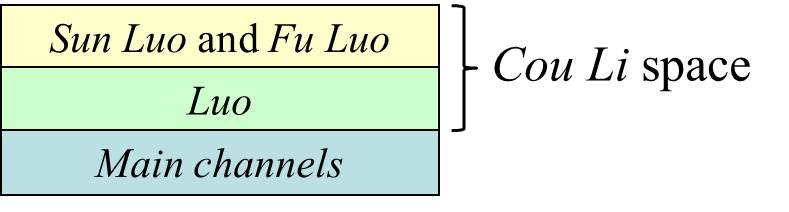
  This is not literally and anatomically the space between skin and muscles but it must be interpreted energetically as a superficial space of the body, actually, apart from the skin itself, the most superficial.  This is the space where the smaller and more superficial Luo channels flow [sun mai and fu mai].

     The Cou Li 腠 理  space is the space between skin and muscles. The Luo channels are more superficial than the Main channels and they run in all directions, horizontally rather than vertically. Amongst other spaces, they fill the Cou Li space, i.e. the space between skin and muscles.

Acupuncture: LU-7 Lieque, L.I.-4 Hegu, BL-13 Feishu.


Wei Qi, pores and sweating
The Wei Qi influences the pores on the skin and therefore sweating. Sweat is in the Cou Li space. Th is space is regulated by the balance of Ying and Wei in it.  When these are regulated, sweating is normal, i.e. normal sweating on exercise or when it is hot.

  The Cou Li space may be “too tight” which means the pores are closed and the person does not sweat on exercise or when it is hot. It also means that if this person gets an invasion of Wind, they will not sweat and one must use Ma Huang Tang Ephedra Decoction.

The Cou Li space may also be “too relaxed” in which case the pores are open and the person sweats spontaneously. It also means that if they get an invasion of Wind, there will be slight sweating, which is actually due to a deficiency of Ying Qi in the Cou Li space; one uses Gui Zhi Tang Ramulus Cinnamomi Decoction to regulate Ying and Wei in the Cou Li space.

Acupuncture: LU-7 Lieque, L.I.-4 Hegu, BL-13 Feishu.


Ying Qi
Ying Qi, the “nutritive” Qi is inseparable from Wei Qi. Although the two are always contrasted with each other, they are actually closely connected.  The Wei Qi could not exist without Ying Qi.
The Ying Qi is called “Nutritive” because it comes from “water and grains”: “Ying Qi is the essence [jing Qi] of water and grains which enters the channels [mai].”  However, Wei Qi also derives from water and grains except that its Qi is more “coarse”: “Wei Qi is the rough [han] Qi of water and grains.”
Ying Qi also keeps the Cou Li space “consolidated”; if the Cou Li space is not "consolidated" it is prone to invasions of Wind. If the Ying Qi is weak in this space, there is slight sweating during an invasion of Wind.

Acupuncture: ST-36 Zusanli, Ren-12 Zhongwan, BL-20 Pishu, BL-21 Weishu.

Blood
The Su Wen relates resistance to disease to Blood in many passages. “When the Qi of Blood is not harmonized, 100 diseases can arise.”  Blood influences resistance to disease also due to its relationship with Ying Qi.
The point BL-11 Dashu is the point of the Upper Sea of Blood of the Chong Mai. I use it with direct moxa, also to stimulate resistance to disease and to external pathogenic factors.

Acupuncture: BL-11 Dashu, BL-17 Geshu (with direct moxa), Ren-4 Guanyuan, KI-3 Taixi, SP-6 Sanyinjiao, ST-36 Zusanli.

Kidneys
The Kidneys play a big role in the immune system and resistance to disease.  First of all, Kidney-Yang is the root of the Wei Qi which stems from the Lower Burner. Resistance to disease from a Chinese perspective depends on Qi and Qi is movement and movement is Yang. Kidney-Yang is the root of the Yang of the whole body.

  If we think of the B cells, T cells, macrophages, neutrophils etc, and how they move in the blood stream and the cells we get an idea of the need for Yang, i.e. movement (although the medium where it all happens is blood which is Yin). If we consider that the B cells produce highly specific antibodies at a rate of as many as 2000 molecules per second for four to five days, we get a very good idea of why it is a Yang process.
  The Kidneys play a role in the immune system also due to Yuan Qi and bone marrow which will be discussed separately.

Acupuncture: BL-23 Shenshu, Ren-4 Guanyuan.

Bone Marrow
Bone marrow depends on the Kidneys, more Yin than Yang. Jing is the organic foundation for the production of Marrow.  “Marrow” (sui 髓) does not correspond to bone marrow of Western Medicine.  “Marrow” in Chinese Medicine is a substance which is the common matrix of bones, bone marrow, brain and spinal cord.

  The Ling Shu says in chapter 36: “The five flavours and fluids amalgamate to form Fat: this irrigates the cavities inside the bones, it tonifies the Brain and the Marrow and flows to the thighs”.1 

          This statement is interesting in its reference to a form of “fat” formed by food and drink which goes to form bone-marrow and the spinal cord and brain.  Therefore the bone-marrow, spinal cord and brain (all manifestations of “Marrow”) are a dense, material type of Qi which the Ling Shu calls “Fat”.  Another interesting aspect of the above statement is the reference to the Marrow flowing to the thighs: therefore the ancient Chinese seem to have grasped the fact that long bones contain bone-marrow.

The Marrow is also the basis for the formation of bone marrow which nourishes the bones. Thus the Kidneys also govern the bone marrow and bones.  The “Simple Questions” in chapter 17 says: “The bones are the Fu [organ] of the Marrow”.2

The Kidneys store Jing which produces marrow: this, in turn, generates bone marrow which contributes to making Blood. A doctor of the Qing dynasty, Zhang Lu, in his book Medical Transmission of the Zhang Family (1695), says: ‘If Qi is not exhausted, it returns essences to the Kidneys to be transformed into Jing; if Jing is not depleted, it returns to the Liver to be transformed into Blood.’3

It seems remarkable that the Chinese account of the blood-forming function of bone marrow, so similar to that given by Western physiology, was formulated during the Qing dynasty before the introduction of Western medicine into China. Lin Pei Qin, a doctor of the Qing dynasty, formulated the theory that ‘Liver and Kidneys have the same source’ and that Blood is transformed from Kidney Jing.

The connection between bone marrow and Blood is a primordial understanding of the role of bone marrow in the immune system since both B cells and T cells derive from bone marrow.

Acupuncture: BL-11 Dashu, G.B.-39 Xuanzhong, BL-17 Geshu, BL-23 Shenshu.


Yuan Qi
The Yuan Qi emerges from between the Kidneys. Chapter 66 of the Nan Jing is one of the earliest descriptions of the Yuan Qi.  It says: “The Yuan Qi is the Motive Force [Dong Qi] situated between the two kidneys, it is life-giving and it is the root of the 12 channels.”4

Yuan Qi can be seen as the dynamic motive force that arouses and moves the functional activity of all the organs. It does so because, like Jing, it is the foundation of vitality and stamina. As a form of Qi, it circulates all over the body, in the channels. It could be said to be the link between Jing, which is more fluid-like and related to slow, long-term cycles and changes, and the day-to-day Qi, which is Qi-like and is related to short-term cycles and changes.

Yuan Qi also facilitates the transformation of Gu Qi into Blood in the Heart. This is another way in which the Kidneys participate in the production of Blood.

Chapter 8 of the Nan Jing: "Sometimes the Cun Kou is normal and yet the patient dies.  Why is that? The pulses of the 12 channels all originate from the Yuan Qi. This Yuan Qi is the root of the 12 channels, it is the Motive Force (Dong Qi 动 气) between the Kidneys, the root of the 5 Zang and 6 Fu and of the 12 channels, the gate of breathing and the origin of the Triple Burner.  It is the spirit that guards against pathogenic factors (or evil influences). Such Qi is the root of humankind; if the root is cut stalks and leaves wither. When the Cun Kou is normal but the patient dies, it means that the Yuan Qi has been cut off internally."

This chapter establishes some very important principles.  First, it talks about the Yuan Qi 原 气: this is essentially the meaning of the expression “Sheng Qi Zhi Yuan” which can be translated as the “Origin of Life’s Qi” or “Origin that generates Qi”.  It says that Yuan Qi is between the Kidneys (like the Ming Men) and that it is the root of the 12 channels, the Triple Burner and the 5 Zang and 6 Fu.

This chapter also establishes the idea that the Yuan Qi (and therefore the Kidneys) is the root of the 5 Zang and 6 Fu, of the 12 channels and of the Triple Burner.

Secondly, this passage establishes the principle that the Yuan Qi (and therefore the Kidneys) play a role in the resistance to pathogenic factors.  Interestingly, it calls the Yuan Qi the Shen that protect from pathogenic factors (or evils).

This is of huge clinical significance because it means that our resistance to pathogenic factors depends not only on the Wei Qi and therefore Lungs but also on the Kidneys and the Yuan Qi (and also Jing due to the extraordinary vessels). In any case, Wei Qi stems from the Lower Burner.

This is of clinical significance not only in resistance to pathogenic factors but also in the pathology of allergic asthma and allergic rhinitis, the root of which is also in the Kidneys, the Jing and the Yuan Qi.

As we shall see, a deficiency of the Kidneys also plays a role in the formation of Latent Heat and a deficiency of Yuan Qi plays a role in the formation of Yin Fire which are often at the base of auto-immune disorders.

Chapter 66 of the Nan Jing also discusses the Yuan Qi: “Below the umbilicus and between the kidneys there is a Throbbing Qi [Dong Qi 动 气] which constitutes a person’s life [sheng ming 生 命].  This [Throbbing Qi] is the root of the 12 channels, also called Yuan Qi [原 气].  The Triple Burner is the envoy of the Yuan Qi [or it allows the Yuan Qi to separate into its different functions]. It is responsible for the passage of the three types of Qi in the 5 Zang and 6 Fu.”


The “three Qi” mentioned here are the Yuan Qi, Ying Qi and Wei Qi of Lower, Middle and Upper Burner respectively. Yuan Qi is part of a triad of types of Qi, all which play a role in resistance to disease in the three Burners: Yuan Qi in the Lower, Ying Qi in the Middle and Wei Qi in the Upper Burner.

Acupuncture: Ren-4 Guanyuan, BL-23 Shenshu, Du-4 Mingmen.


Jing
We are used to think of Jing as the precious Essence that we inherit from the parents, that determines our constitution and that resides in the Lower Dan Tian.  When described like that, the Jing sounds like an inert essence but, in reality, Jing circulates in the channels and plays an important role in resistance to disease.

It circulates in the channels through the extraordinary vessels. The influence of the Extraordinary Vessels on the space between skin and muscles implies their important role in protection from pathogenic factors.  As the Extraordinary Vessels circulate the Kidney-Jing, this means that Jing plays a role in many physiological functions and, in particular, in the protection against external pathogenic factors.

A deficiency of Jing plays a role in the formation of Latent Heat and, in my opinion, in the aetiology of allergic diseases such as allergic asthma, allergic rhinitis and atopic eczema and of auto-immune disorders.  Indeed, it is in my opinion the aetiology of atopy itself.

The "Study of the Eight Extraordinary Vessels" by Li Shi Zhen says: "...when the Qi of the channels overflows, it flows into the extraordinary vessels where it is turned into irrigation, warming the organs internally and irrigating the space between skin and muscles externally."
The Qi of the Extraordinary Vessels “irrigates” the space between the skin and muscles where Defensive Qi circulates to prevent invasion of pathogenic factors.

Because all the Extraordinary Vessels derive directly or indirectly from the Kidneys, they play an important role in the defence against exterior pathogenic factors.

Acupuncture
- Du Mai: SI-3 Houxi with BL-62 Shenmai, BL-23 Shenshu, Du-4 Mingmen, Du-14 Dazhui.
- Ren Mai: LU-7 Lieque with KI-6 Zhaohai, Ren-4 Guanyuan.

Stomach and Spleen
Finally, the Stomach and Spleen also play a role in the resistance to disease.  This is quite obvious since they are the origin of nutrition and of Gu Qi which is the basis for both Ying and Wei Qi.
     The Stomach and Spleen play a particularly important role in the immune system of children. Dr Shen used to say that there are only two aetiological factors in children: external Wind and nutrition (Stomach and Spleen).  He then added that, the younger the child, the more there is only one aetiological factor and that is the Stomach and Spleen because they determine resistance to external pathogenic factors.

Acupuncture: Ren-12 Zhongwan, ST-36 Zusanli, BL-20 Pishu, BL-21 Weishu.

THE IMMUNE SYSTEM AND THE 6 STAGES AND 4 LEVELS
The 6 Stages were developed by Zhang Zhong Jing in his book "A Discussion of Diseases from Cold Injury" (Shang Han Lun, ca. AD 220) while the 4 Levels were developed much later by Ye Tian Shi in his book "A Discussion of Warm Diseases" (Wen Bing Lun, 1742).

     The patterns of both of these theories describe the progression of fevers from external invasions of Wind. Although these two theories are often contrasted to each other, they have many points in common as illustrated in the diagram below.  The patterns in this diagram are colour-coded to show the connections between the patterns of the 6 Stages with those of the 4 Levels. In particular, there is a strong connection between the Yang Ming Stage and the Qi Level and many of the prescriptions used by Ye Tian Shi for the Qi Level are the same as those for the Yang Ming Stage in the Shang Han Lun.


COMPARISON OF 6 STAGES AND 4 LEVELS PATTERNS


     I have been thinking about these ancient patterns and it occurred to me that they could be seen as a picture of the immune system and this idea is illustrated in the diagram below.  For example, if we fall ill with a fever of external origin (we can think of influenza, for example) and, after the initial stage, we develop a higher fever, it indicates that the body is reacting and fighting the pathogenic factor: this is a good state of the immune system and it corresponds to the Qi Level of the 4 Levels or the Yang Ming stage of the 6 Stages.

     Allergy, such as in allergic asthma and allergic rhinitis, represents a hyper-activity of the immune system that is reacting to allergens to which it should not: this could be represented by the Wei Level pattern in the 4 Levels or the Tai Yang Stage in the 6 Stages.

     In chronic fatigue syndrome, the immune system is reacting to a viral infection, but not enough, so that the disease has a chronic course: this corresponds to the Gall-Bladder-Heat pattern of the 4 Levels or the Shao Yang Stage of the 6 Stages.

     If our immune system is greatly debilitated, it may succumb to cancer and this corresponds to the Blood Level of the 4 Levels or the three Yin Stages of the 6 Stages.

     In autoimmune diseases, the immune system has a deep dysfunction that leads it to attack the cells of the body, mistaking them for "other": this often (but not always) corresponds to Latent Heat.


AUTOIMMUNE DISEASES in CHINESE MEDICINE
In my view, the presence of an auto-immune dysfunction of the immune system indicates an aetiological factor that is at a deep energetic level and that is different from normal exterior pathogenic factors. It indicates a more insidious form of pathogenic factor. The immune dysfunction also indicates a pathology of the Yin aspects of the immune system, i.e. Blood, bone marrow, Kidneys.

However, auto-immune diseases are so many and so disparate that it is impossible to prescribe a blanket treatment method for them.  For example, the pathology of Hashimoto’s thyroiditis and MS are so different that they really have very little in common.

The only thing they might have in common is the aetiology.  In many, but not all, auto-immune diseases the aetiology is Latent Heat. This is the case especially when there are symptoms of Heat, with lassitude and possibly fever, they have something in common in their pathology.  In other cases of autoimmune diseases, the main pathology may also be Yin Fire. Also, if we know we are dealing with an auto-immune disease, it gives us an important pointer from the point of view of prognosis.

However, there is an interesting common feature of some auto-immune diseases and that is the pulse. I have noticed this especially in MS, RA, Hashimoto's thyroiditis and Crohn’s disease.  The pulse is of the Leather [ge 革] quality, i.e. it is superficial and “stretched” like a drum but empty at the deep level: it feels hard on the outside but empty inside, like a drum.  The Leather pulse indicates severe deficiency of Blood, Essence or Yin. It also indicates Qi floating upwards because it is not rooted by Blood. This would indicate that the root of these autoimmune diseases is a Kidney deficiency.

APPROACH TO TREATMENT OF AUTO-IMMUNE DISEASES
- No Chinese theory obviously.

- All diseases are very different and must be treated according to their specific pathology and patterns (e.g. 
   MS and Hashimoto’s thyroiditis have nothing in common from Chinese perspective).

- Being auto-immune affects ease (or difficulty) of treatment and prognosis. They are more difficult to treat.

- Compare hyperthyroidism and Graves' Disease: latter has more severe symptoms and will be more
   difficult to treat.

- In late stages of auto-immune diseases, there seems to be a common pulse, i.e. the Leather pulse which is
   superficial but empty at the deep level. The surface is kind of “broad” and feels kind of stretched like a
   drum. This indicates a severe Kidney deficiency.

- Must grasp aetiology, pathology and patterns of the disease ignoring its auto-immune nature. For _example, Sjogren’s Syndrome, Hashimoto thyroiditis, Crohn’s Disease, MS and RA have very little or _nothing in common in terms of pathology.
______Sjogren’s Syndrome: Yin Xu of Stomach and Liver
______Hashimoto's Thyroiditis: Phlegm, Spleen-Qi Xu, Kidney-Yang Xu
______Crohn’s Disease: Damp-Heat in Intestines
______MS: Dampness, Stomach-Spleen Xu, Liver-Kidneys Xu
______RA: Damp-Heat in joints

- Must treat the Kidneys which are the root of the auto-immune process.  This can be Kidney-Yang,
   Kidney-Yin, Jing, Yuan Qi, Minister Fire.

- Must treat inflammation with at least one or two anti-inflammatory herbs.

- Check if there is Latent Heat or Yin Fire and treat them accordingly.

LIST OF ANTI-INFLAMMATORY CHINESE HERBS5
Ba Ji Tian Radix Morindae officinalis
Bai Shao Radix Paeoniae alba
Bai Zhi Radix Angelicae dahuricae
Can Er Zi Fructus Xanthii
Cao Wu  Radix Aconiti Kusnezoffi
Chai Hu Radix Bupleuri
Chi Shao Radix Paeonia rubra
Chuan Xin Lian Herba Andrographis
Da Huang Radix et Rhizoma Rhei
Da Qing Ye Folium Isatidis
Dan Shen Radix Salviae miltiorrhizae
Dang Gui Radix Angelicae sinensis
Dang Shen Radix Codonopsis
Di Yu Radix Sanguisorbae
Du Huo Radix Angelicae pubescentis
Du Zhong Cortex Eucommiae
Fang Feng Radix Saposhnikoviae
Fu Zi Radix Aconiti Lateralis preparata
Hong Hua Flos Carthami
Hei Zhi Ma Semen Sesami nigri
Hu Zhang Rhizoma Polygoni cuspidati
Huai Hua Flos Sophorae
Huang Lian Rhizoma Coptidis
Huang Qi Radix Astragali
Huang Qin Radix Scutellariae
Jiang Huang Rhizoma Curcumae longae
Jie Geng Radix Platycodonis
Jin Qian Cao Herba Lysimachiae
Jin Yin Hua Flos Lonicerae
Jing Jie Herba Schizonepetae
Ku Shen Radix Sophorae flavescentis
Kuan Dong Hua Flos Farfarae
Lei Gong Teng Radix Tripterygii wilfordii
Lian Qiao Fructus Forsythiae
Lu Hui Aloe
Lu Lu Tong Fructus Liquindambaris
Man Jing Zi Fructus Viticis
Mao Dong Qing Radix Ilicis pubescentis
Mu Dan Pi Cortex Moutan
Nu Zhen Zi Fructus Ligustri lucidis
Pi Pa Ye Folium Eriobotryae
Qiang Huo Rhizoma et Radix Notopterygii
Qin Jiao Radix Gentianae macrophyllae
Qin Pi Cortex Fraxini
San Qi  Radix Notoginseng
Shan Dou Gen Radix Sophorae tonkinensis
Sheng Ma Radix Cimicifugae
Tao Ren Semen Persicae
Tian Ma Rhizoma Gastrodiae
Wu Jia Pi Cortex Acanthopanacis
Xi Xian Cao Herba Siegesbeckiae
Xi Xin Herba Asari
Xia Ku Cao Spica Prunella
Xian Mao Rhizoma Curculiginis
Xiang Fu  Rhizoma Cyperi
Xiao Ji  Herba  Cirisii
Xu Chang Qing Radix Cynanchi Paniculati
Xue Jie Sanguis Draconis
Xue Yu Tan  Crinis Carbonisatus
Xun Gu Feng Herba  Aristolochiae Mollissimae
Ye Ju Hua Flos Chysanthemi Indici
Yin Yang Huo Herba Epimedii
Yu Xing Cao  Herba Houttuyniae
Ze Xie Rhizoma Alismatis
Zhi Zi Fructus Gardeniae
Zi Cao Gen Radix Lithospermi

     As one can see, this list is so extensive that practically every formula we use will have some anti-inflammatory herb in it.  I believe it is very important to use some anti-inflammatory herbs in the treatment of autoimmune diseases. I especially use Mu Dan Pi Cortex Moutan.  It is worth also noting that the anti-inflammatory herbs are found in many different categories of herbs, not just those that clear Heat: thus having an anti-inflammatory effect does not necessarily involve clearing Heat from the Chinese perspective.  Indeed, it is very interesting (and somewhat surprising) that even Fu Zi and Cao Wu (extremely hot herbs) are anti-inflammatory.

http://news.harvard.edu/gazette/story/2012/02/secrets-of-ancient-chinese-remedy-revealed/
The following is an online article from Harvard University about the effect of  the Chinese herb Chang Shan Radix Dichroae febrifugae on autoimmune diseases.
     For roughly 2,000 years, Chinese herbalists have treated malaria using a root extract, commonly known as Tu Chang Shan, from a type of hydrangea that grows in Tibet and Nepal. More recent studies suggest that halofuginone, a compound derived from this extract’s bioactive ingredient, could be used to treat many autoimmune disorders as well. Now, researchers from the Harvard School of Dental Medicine have discovered the molecular secrets behind this herbal extract’s power.

It turns out that halofuginone (HF) triggers a stress-response pathway that blocks the development of a harmful class of immune cells, called Th17 cells, which have been implicated in many autoimmune disorders.
“HF prevents the autoimmune response without dampening immunity altogether,” said Malcolm Whitman, a professor of developmental biology at Harvard School of Dental Medicine and senior author on the new study. “This compound could inspire novel therapeutic approaches to a variety of autoimmune disorders.”

  "This study is an exciting example of how solving the molecular mechanism of traditional herbal medicine can lead both to new insights into physiological regulation and to novel approaches to the treatment of disease,” said Tracy Keller, an instructor in Whitman’s lab and the first author on the paper.

This study, which involved an interdisciplinary team of researchers at Harvard-affiliated Massachusetts General Hospital and elsewhere, will be published online Feb. 12 in Nature Chemical Biology.
Prior research had shown that HF reduced scarring in tissue, scleroderma (a tightening of the skin), multiple sclerosis, scar formation, and even cancer progression. “We thought HF must work on a signaling pathway that had many downstream effects,” said Keller.

In 2009, Keller and colleagues reported that HF protects against harmful Th17 immune cells without affecting other beneficial immune cells. Recognized only since 2006, Th17 cells are “bad actors,” implicated in many autoimmune diseases such as inflammatory bowel disease, rheumatoid arthritis, multiple sclerosis, and psoriasis.

The researchers found that minute doses of HF reduced multiple sclerosis in a mouse model. As such, it was one of a new arsenal of drugs that selectively inhibits autoimmune pathology without suppressing the immune system globally.  Further analysis showed that HF was somehow turning on genes involved in a newly discovered pathway called the amino acid response pathway, or AAR.

Scientists have only recently appreciated the role of the nutrient sensing-AAR pathway in immune regulation and metabolic signaling. There is also evidence that it extends life span and delays age-related inflammatory diseases in animal studies on caloric restriction.

AAR lets cells know when they need to preserve resources. For example, when a cell senses a limited supply of amino acids for building proteins, AAR will block signals that promote inflammation because inflamed tissues require lots of protein.

“Think about how during a power outage we conserve what little juice we have left on our devices, foregoing chats in favor of emergency calls,” said Whitman. “Cells use similar logic.”For the current study, the researchers investigated how HF activates the AAR pathway, looking at the most basic process that cells use to translate a gene’s DNA code into the amino acid chain that makes up a protein.

The researchers were able to home in on a single amino acid, called proline, and discovered that HF targeted and inhibited a particular enzyme (tRNA synthetase EPRS) responsible for incorporating proline into proteins that normally contain it. When this occurred, the AAR response kicked in and produced the therapeutic effects of HF treatment.

Providing supplemental proline reversed the effects of HF on Th17 cell differentiation, while adding back other amino acids did not, establishing the specificity of HF for proline incorporation. Added proline also reversed other therapeutic effects of HF, inhibiting its effectiveness against the malaria parasite as well as certain cellular processes linked to tissue scarring. Again, supplementation with other amino acids had no such effect. Such mounting evidence clearly demonstrated that HF acts specifically to restrict proline.

The researchers think that HF treatment mimics cellular proline deprivation, which activates the AAR response and subsequently impacts immune regulation. Researchers do not yet fully understand the role that amino acid limitation plays in disease response or why restricting proline inhibits Th17 cell production.
Nevertheless, “[the] AAR pathway is clearly an interesting drug target, and halofuginone, in addition to its potential therapeutic uses, is a powerful tool for studying the AAR pathway,” said Whitman.


END NOTES
1. 1981 Spiritual Axis (Ling Shu Jing). People’s Health Publishing House, Beijing, p.  77.
2. Simple Questions, p. 100.
3. Zhang Lu Medical Transmission of the Zhang Family (Zhang Shi Yi Tong), cited in Syndromes and Treatment of the Internal Organs (Zang Fu Zheng Zhi). Tianjin Scientific Publishing House, Tianjin, 1981, p.27.
4. Nanjing College of Traditional Chinese Medicine 1979 A Revised Explanation of the Classic of Difficulties (Nan Jing Jiao Shi). People’s Health Publishing House, Beijing, p.  144.
5. Chen JK, Chen TT, "Chinese Medical Herbology and Pharmacology", Art of Medicine Press, City of Industry, CA, 2001.